
What is Early Allergen Introduction?

What is early allergen introduction?
If you’ve started reading about introducing foods to your baby, you’ve probably seen this phrase come up: early allergen introduction.
Here’s the simple answer: Early allergen introduction means giving your baby small, consistent exposure to common food proteins—like peanut, egg, and milk—during the first 6 months of life, when their immune system is still learning what is safe.
It’s a shift from older advice. And for many parents, it raises a very reasonable question: Why does timing matter so much?
Why early allergen introduction matters
For a long time, parents were told—wait until your baby is clearly ready for solids. Wait until you feel confident. But what we’ve learned over the past decade is that in early infancy, your baby’s immune system is actively learning how to respond to the world—including food.
💡 During this period:
Allergic reactions are more likely to be recognized as normal — and delayed exposure may make foods feel unfamiliar later.
This is what people are referring to when they talk about a “critical window” for early introduction. In fact, by 4 months of age, 20% of babies who will develop food allergy already have it.
One of the most important findings comes from the LEAP study, which found that infants who were introduced to peanut early had an 81% lower rate of peanut allergy compared to those who avoided it.
That doesn’t mean any single product creates that outcome, but it does show something important: timing and consistency of exposure matter.
When should allergens be introduced to a baby?
This is where things can get confusing, because there are two timelines happening at once.
1. Developmental readiness (solids)
Most babies are ready to begin solid foods around 4–6 months, when they:
- can sit with support
- show interest in food
- have better control of their mouth and tongue
Before this stage, babies naturally push food out of their mouth (a reflex that protects them) and before they’re ready for solids, the immune system is already learning from exposure.
2. Immune readiness (exposure)
At the same time, the immune system is actually much earlier with critical milestones happening during the period between birth and 6 months. This creates a gap: babies may not be ready to sort all allergens yet, but their immune system is already learning from exposure.
That gap is where early allergen introduction becomes relevant.
✅ Why the gap matters
The immune system’s learning window opens before babies are developmentally ready for solid foods. Early exposure — even in tiny amounts — during this window helps the immune system learn to recognize common food proteins as safe.
How early allergen introduction works
The goal is not to feed a large amount of food. In fact, research shows something more practical: frequency matters more than quantity.
In early introduction studies, findings show that when small amounts are given regularly, it was enough to support the immune system’s learning. This is often referred to as “microdosing”—very small exposures, repeated consistently.
From a real-life perspective, this matters because:
- Most families are not giving peanut or egg every single day
- Life with a baby is unpredictable
- Feeding routines change constantly
The core principle
Not perfect exposure — just consistent exposure over time.
What about introducing allergens through food?
Once your baby is ready for solids, real food plays an important role. Around 4–6 months, many parents begin introducing:
- thinned peanut butter
- scrambled egg
- yogurt or dairy
- soft, mashed foods
This is a great step, but it also comes with real-world challenges:
- It’s not always daily
- Portions vary
- It can be hard to prepare consistently
And earlier than this stage, most babies simply aren’t developmentally ready to eat these foods safely.
Where Amuse fits into early allergen introduction
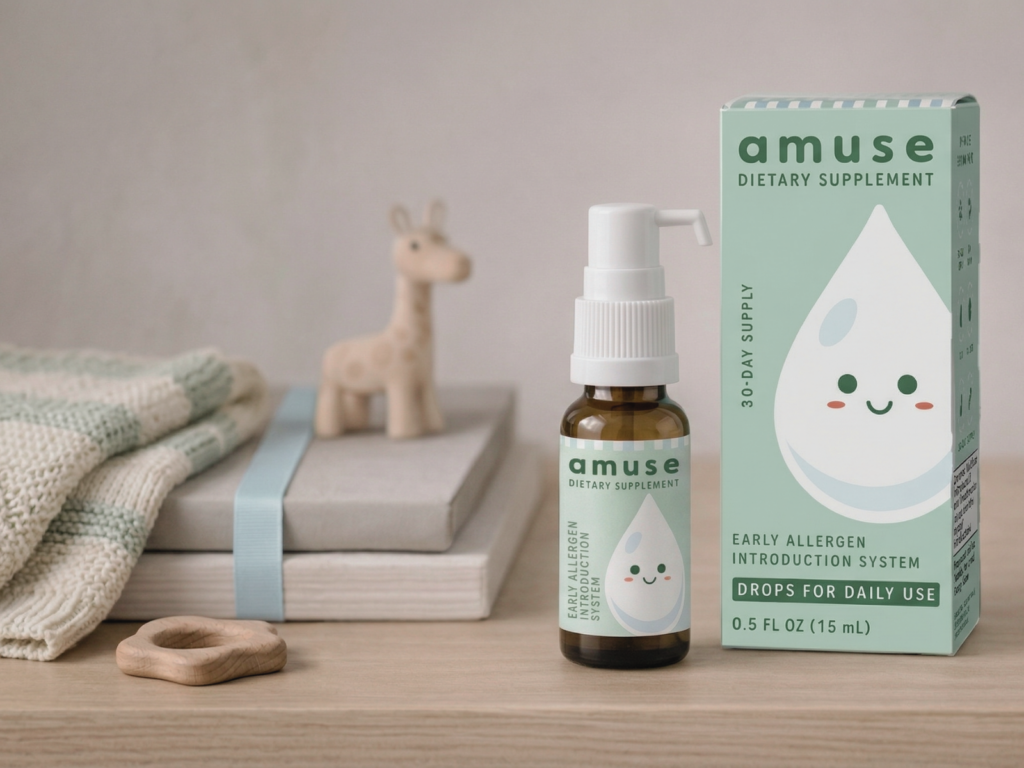
This is where some families look for a more consistent approach. Amuse was designed to support early allergen introduction in a way that fits how families actually live:
- small, measured amounts of common food proteins
- given daily as part of a simple routine
- starting before solids are fully established
For many families, it functions as a steady baseline of exposure before their baby can start trying whole food forms. It works alongside whatever their baby is able to try.
You can learn more about how this works here:
→ https://amusedrops.com/pages/amuse-drops
And if you want to go deeper into the research behind early introduction:
→ www.amusedrops.com/science
What this means for you
If you’re thinking about early allergen introduction, here’s the part that matters most: You don’t need to do everything perfectly. You don’t need large amounts of food. You don’t need a complicated plan.
What matters is that you start introducing allergens early and stay consistent over time.
That might look like:
- introducing foods when your baby is ready
- creating simple, repeatable routines
- finding tools that make consistency easier—this is where Amuse can help
Common questions parents ask
• Science overview: www.amusedrops.com/science
• Product details + FAQs: https://amusedrops.com/products/amuse-drops
The Bottom Line
Early allergen introduction is about giving your baby’s immune system regular exposure to common food proteins during a time when it’s actively learning. Not through perfect timing. Not through large amounts. Through small, consistent steps over time.
And like the most important things in early parenthood, it works best when it fits into your real, everyday routine.

About the Author
Dr. Brynn Everist, MD • Board-Certified Allergist & Immunologist
Dr. Everist is a Mayo Clinic-trained allergist specializing in pediatric food allergies and sublingual immunotherapy. As the founder of Amuse, she combines clinical expertise with lived experience as a mother of three to make early allergen introduction accessible to all families.
Tags:
Published:
|
Last Updated:
- May 6, 2026
|
Medical Review By:
Dr. Brynn Everist, MD
Keep reading
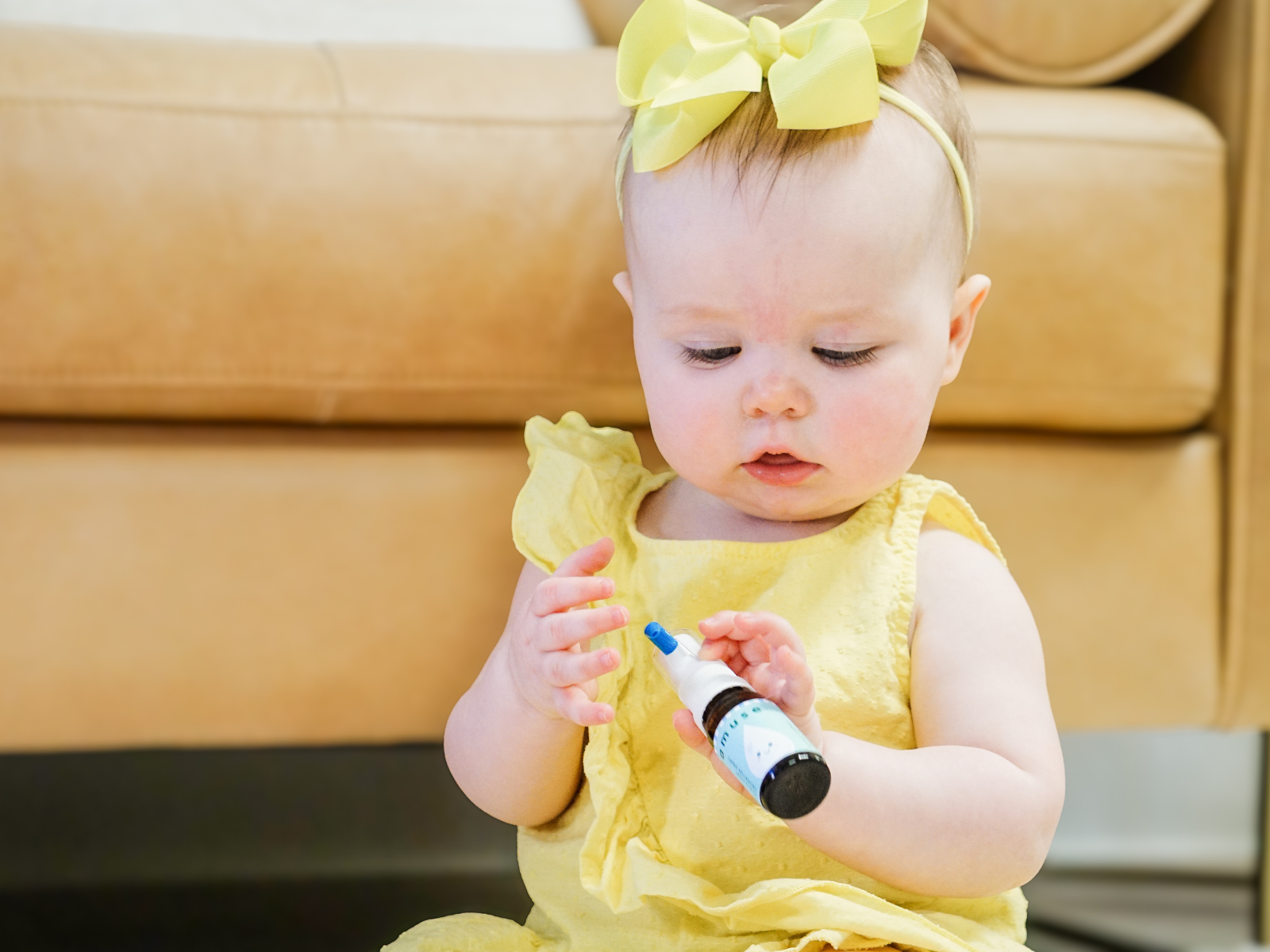
Ready to Start Early Introduction?
starting as early as 2 months.